
What Is Zero Waste? A Simple Explanation for Beginners
- sskrghadi@gmail.com
- February 21, 2026
- 8:33 pm
If you’ve ever searched “what is zero waste” and felt confused or overwhelmed, you’re not alone. The term is often shown as a strict, all-or-nothing lifestyle, filled with perfectly organised homes and people claiming they produce no waste at all. In reality, zero waste means reducing waste where you can and making better choices gradually without needing to be perfect or change everything at once.
Table of Contents
Toggle
A common question that comes up at this point is: ” Does zero waste mean I can never throw anything away again? “
The good news is — no. This lifestyle isn’t about producing absolutely no waste, but about reducing what you can and doing the best you can with what you have.
understanding waste reduction living
At its core, zero waste is a mindset and lifestyle approach, not a strict set of rules, aligning with how organisations like the Zero Waste International Alliance define zero waste.
It focuses on:
- Reducing what we don’t need in the first place
- Reusing what we already have
- Making thoughtful choices to prevent waste before it’s created
The goal isn’t to achieve literal zero trash overnight. The goal is to send less waste to landfills and incinerators over time.
Think of zero waste as asking one simple question:
“Is there a less wasteful option I can choose here?”
Even choosing that option sometimes still counts.
Most importantly, zero waste is built on progress over perfection. Every small improvement matters.
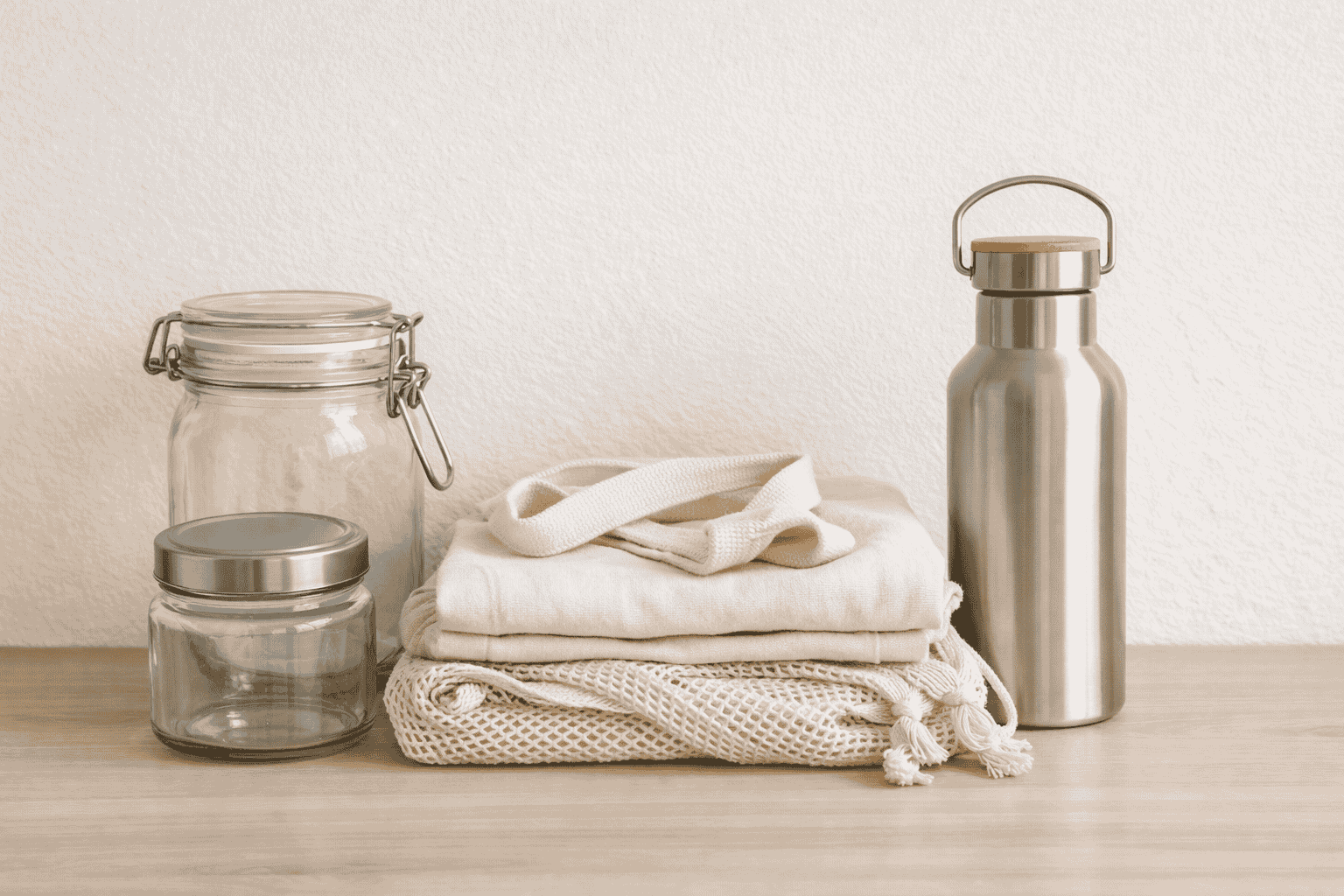
Zero Waste vs. Low Waste: What’s the Difference?
Many beginners actually start with low-waste living, even if they don’t call it that.
- Zero waste is the long-term vision
- Low waste is the realistic starting point
Low waste means reducing what you can, where you can, without pressure or guilt. For beginners, low waste is often the most sustainable way to stay consistent and motivated.
sustainable living looks different for everyone
Zero waste isn’t about fear or guilt. It all comes down to creating a lifestyle that is easier for you and better for the environment.
Effects on the Planet
When wasted material is reduced:
- Less waste ends up in landfills.
- Less plastic ends up in oceans, helping protect marine life and animals.
- To create single-use items, fewer resources are required.
Small adjustments made by a large number of people can have a major impact.
Personal Benefits of Zero Waste
Your everyday life can be made better by zero waste as well:
- Future savings on expenses (reusables replace disposables)
- reduces the clutter by letting you keep the things you really use.
- promotes meaningful living (more purpose, fewer impulsive purchases).
It’s usually about doing less, but better, rather than more.
Small Steps, Big Impact
Making changes doesn’t require you to transform every aspect of yourself.
- One bottle that can be reused
- One fewer impulse purchase
- One habit at a time
You’d be surprised at how quickly those little acts add up.
The Facts About Zero Waste and What It Is Not
Because of confusion, many people avoid zero waste. Let’s talk about those points.
Zero waste is not about:
- Being absolutely perfect.
- Purchasing expensive eco-friendly products.
- Throwing away everything you already have
Actually, one of the most waste-free things you can do is to use what you already have. Zero waste ought to match, instead of compete with, your energy level, lifestyle, and financial situation.
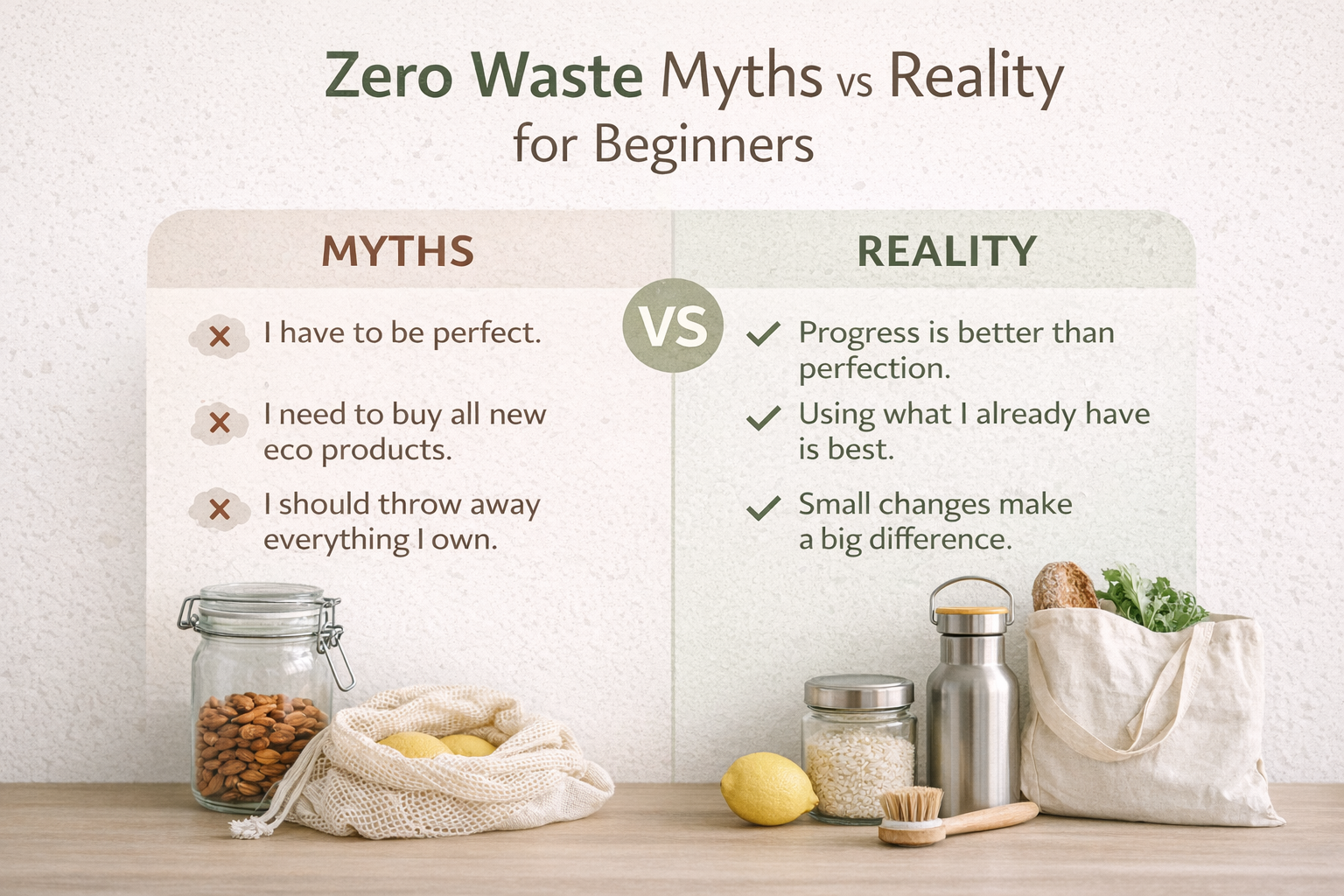
Why Beginners Sometimes Give Up and How to Stop It
A lot of people quit because they
- Try to make all the changes at once.
- Online, they judge themselves against others.
- Look for perfection rather than consistency.
The answer?
Start small. Move slowly. Make changes that feel achievable in your actual, day-to-day life.
is a low-waste lifestyle realistic
Yes—when you approach it gently.
Zero waste looks different for everyone:
- Your home
- Your budget
- Your location
- Your schedule
There’s no single “right” way to do it. Instead of focusing on everything, you could change focus to one or two simple shifts that naturally fit into your routine. That’s how sustainable habits are built.
If you’re ready to move from understanding zero waste to actually practising it, the next step is learning how to start—without overwhelm.
👉 Explore the 5-Step Zero Waste Beginner Guide for simple, practical actions you can take right away.
So, how a low-waste lifestyle works
It is:
- A mindset focused on reducing our unused waste.
- A way to live a more sustainable and intentional life.
- A flexible path based on small, achievable changes
You do not have to look perfect.
You don’t have to do everything at once.
All you have to do is start from where you are.
Choose progress over pressure, learn while you do, and take things one step at a time.