
Zero-Waste Kitchen: A Beginner's Guide to Less Waste
- Kashish Ghadi
- August 26, 2026
- 9:01 pm
If you’ve ever scrolled past a photo of someone’s spotless pantry — rows of matching glass jars, not a single piece of plastic in sight — and thought “there’s no way I could ever do that,” you’re not alone. The internet’s version of zero-waste living can feel like a club with a very high entry fee. The good news? It isn’t. A zero-waste kitchen isn’t about achieving a single jar of trash for the whole year; it’s about making a handful of small, doable swaps that add up over time. By the end of this guide, you’ll know exactly what a zero-waste kitchen really means, why it’s worth the effort, and which simple steps to take first — no mason jars required.
Table of Contents
Toggle
Exactly What Is a "Zero-Waste Kitchen"?
A zero-waste kitchen, by its name, doesn’t literally produce zero trash. In practice, this means running your kitchen to avoid sending as much as possible to landfill – through smarter choices about what you buy, how you store it and what happens to it when you are finished.
Here’s an easy way to think about it: the 5 R’s adapted for everyday cooking:
- Refuse what you don’t need (extra packaging, single-use freebies)
- Reduce what you do buy, especially over-packaged items
- Reuse containers, bags, and jars instead of buying new ones
- Recycle what’s left, properly and thoughtfully
- Rot (compost) food scraps that can’t be avoided
This is different from terms like “eco-friendly” or “sustainable,” which are broader lifestyle ideas. A zero-waste kitchen is specifically about the systems and habits in one room of your home — which is exactly why it’s such an approachable place to start.
Zero-Waste vs. Low-Waste — Why the Distinction Matters
“Zero-waste” can feel like an all-or-nothing label, which is part of why it scares people off. “Low-waste” is often the more honest — and more sustainable — term for what most people are actually doing. Permitting yourself to aim for “low-waste” rather than “zero” removes a lot of unnecessary pressure, and it’s a mindset shift worth making before you change a single habit.
What a Realistic Zero-Waste Kitchen Looks Like
A realistic zero-waste kitchen still has some plastic in it. It still occasionally produces trash. It might not look photogenic. What it does have is a few consistent habits — bringing your own bags, storing food properly, composting what you can — that quietly reduce waste in the background, without requiring constant willpower.
Why a Zero-Waste Kitchen Matters (Beyond the Planet)
It’s easy to assume this is purely an environmental conversation, but the kitchen is one of the few areas where doing right by the planet and doing right by your wallet and your sanity tend to line up.
Kitchens generate waste in two main ways: food that goes uneaten and packaging that goes straight in the bin. Both are largely preventable with a few adjustments to how you shop and store food. Beyond the environmental upside, a lower-waste kitchen tends to be a calmer one — less clutter from packaging, simpler grocery runs, and fewer “what do I even do with this” moments at the sink.
The Hidden Cost of "Convenience" Packaging
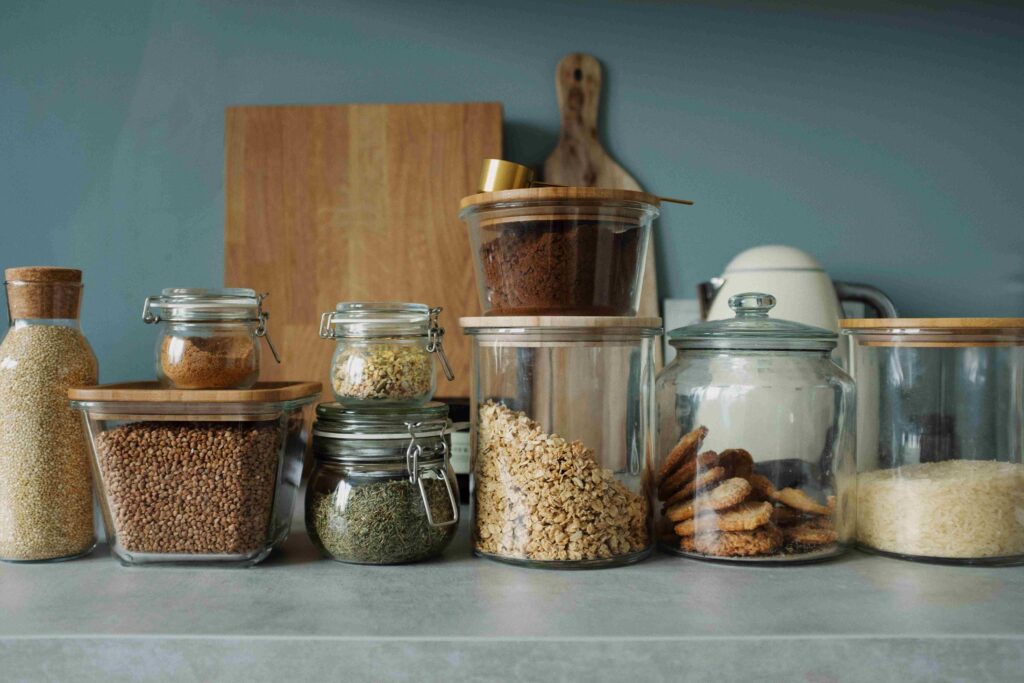
Pre-portioned, individually wrapped foods are often priced at a premium specifically for that convenience. Buying in bulk or choosing less-packaged versions of the same product is frequently the cheaper option, not just the more sustainable one — convenience and cost don’t have to be at odds here.
How a Low-Waste Kitchen Saves You Money Long-Term
Reusable containers, cloth bags, and a well-organised fridge all cost something upfront. But they pay for themselves by cutting down on spoiled food and single-use rebuys. Think of it less as a purchase and more as a one-time investment in a lower grocery bill.
How to Start a Zero Waste Kitchen (Step-by-Step Guide for Beginners)
The most common mistake beginners make is to try to change everything all at once. Instead, do a quick audit: For a week, keep track of what actually makes its way into your trash and recycling. That list will guide you on where to focus first – you won’t have to guess.

Step 1: Grocery Swaps That Make the Biggest Difference
Start where the most packaging enters your kitchen: the grocery store. Bring reusable produce bags instead of taking the thin plastic ones provided. If your store has a bulk bins section, try buying grains, pasta, or spices there instead of pre-packaged versions. Even choosing the cardboard box over the plastic clamshell when both are available adds up.
Step 2: Plastic-Free Cooking Essentials
Look at what you reach for most during cooking and prep — cling film, plastic wrap, disposable sandwich bags — and replace just one of these at a time. Swapping cling film for a reusable lid or beeswax wrap is often the easiest first move, since it solves an everyday problem without changing how you cook.
Step 3: Reusable Alternatives Worth Investing In First
You don’t need to buy everything labelled “zero-waste” to get started. Prioritise a few high-use items: a couple of cloth produce bags, one or two beeswax wraps, and a set of glass containers you can use for both storage and leftovers. These three categories alone cover most of what a typical kitchen throws away in plastic.
Step 4: Smart Food Storage to Reduce Spoilage
Food waste is often a storage problem in disguise. Simple habits — storing leafy greens with a paper towel to absorb moisture, keeping herbs in a glass of water like flowers, and organising your fridge so older items are visible — can meaningfully extend how long food stays good, which means less of it ends up in the bin before you get to use it.
Step 5: Composting 101 for Beginners
Composting sounds more intimidating than it is. At its simplest, it’s collecting food scraps — vegetable peels, coffee grounds, eggshells — so they break down into soil instead of sitting in a landfill. If you don’t have outdoor space, countertop compost bins or community drop-off programs (common in many cities) make this accessible from an apartment too. You don’t need a backyard or a green thumb to start; you just need a container and a place to take it.

Common Zero-Waste Kitchen Myths
A lot of the overwhelm around this topic comes from myths that make the whole idea seem harder, more expensive, or more rigid than it actually is.
Myth 1 : Zero-Waste Means Zero Trash
In reality, even people who’ve been doing this for years still produce some waste. The goal is a meaningful reduction, not a perfect record. Letting go of the “zero” in the literal sense makes the whole approach far more sustainable for you personally.
Myth 2 : You Need Special Products to Begin
Before buying anything new, it’s worth using up what you already have. That old jar in your cupboard works just as well as a trendy “zero-waste” container. Buying a wave of new products before you’ve built the habits to use them often creates more waste, not less.
A Change in Mindset, Not a Checklist
A zero-waste kitchen is not a box to check or a finish line to cross. It’s an ongoing practice that gets a little easier with every habit you build. Instead of trying to adopt everything in this guide at once, pick one swap that feels comfortable this week, whether that’s carrying your own produce bags or starting a small compost bin. It’s the small, consistent changes that actually stick, and that’s a far more realistic definition of “zero-waste” than any perfectly posed photo online.
FAQ
1. What is the easiest first step to a zero-waste kitchen?
Instead of transforming your entire kitchen at once, start with one grocery swap, like bringing reusable produce bags.
2. Do I need special products to start a zero-waste kitchen?
No — use up what you already have first, and add reusable items only as you need them.
3. Do you need to compost in a zero-waste kitchen?
It’s not a must, but it helps a lot in reducing food waste. Even small-scale countertop composting or local drop-off programs can help.
4. How much money do you actually save with a zero-waste kitchen?
Cutting back on food waste and reusing containers, as well as buying in bulk, can significantly cut your grocery bill over time because you’re paying less for packaging and wasting less food.

Kashish Ghadi
Kashish is the founder of GoWasteFree, a blog helping everyday people reduce waste without the overwhelm. After seeing news footage of plastic-filled rivers, she started making small swaps — one habit at a time. Today she shares practical, beginner-friendly guides on zero-waste living, sustainable swaps, and eco-friendly home habits. She believes progress always beats perfection.
Start Your Zero-Waste Journey Today
Join readers getting simple, practical tips every week.
Sign up free and get the Starter Checklist instantly.