


Living a zero-waste lifestyle can be both exciting and challenging. With so many eco-friendly options and beautifully curated Instagram kitchens, it can be hard to know where to start, especially if you’re short on time or money.
I’ve created a 5-Step Plan for a Zero Waste for Beginners for this reason. It’s a simple yet effective guide designed for everyday use. Whether your goal is to reduce the amount of single-use plastic you use, manage your kitchen waste, or learn what zero waste looks like for beginners, these steps will help you get started stress-free.
You’ll find five simple actions you can take right now to reduce waste, save money, and create a sustainable routine that you can actually do in the next few minutes. To help you jumpstart your new habits.Let’s take this change one achievable step at a time.
Why Zero Waste?
Simply put, zero waste is about making actions that are good for the earth and for you, not about being perfect. Future generations can benefit to healthier seas and fewer waste sites as a result of every compost bin started, reusable bag carried, and plastic bottle reduced.
Choosing a zero-waste lifestyle can have benefits for someone else as well. By only keeping things they actually use, many people find they save money and enjoy less clutter at home. Knowing that even seemingly small everyday tasks, such as having a reusable coffee cup or buying unpackaged produce, can have a benefit and offer one a sense of freedom.
If you have been interested in sustainability but have felt overwhelmed, consider zero waste as a collection of sustainable living tips that you can start applying slowly. Creating a lifestyle that is in line with your values while making your life easier, lighter, and more enjoyable is the goal of the journey, doing everything at once, from simplifying your shopping to deciding what belongs in your trash.
What “Zero Waste” Means for Beginners
At first, the concept of “zero waste” can sound hard, as if creating no waste at all is the goal. In reality, the goal is progress not perfection. The basic principle of a zero waste lifestyle for novices is cutting down on waste, reusing what you can, and introducing small, sustainable changes where they naturally fit into your daily routine.
Using glass containers, reusable shopping bags, or bulk-bin snacks, for instance, could be the first step in making a kitchen plastic-free. Over time, these small actions can have an important effect without requiring you to make drastic changes all at once.
Far from becoming a strict set of rules, look at zero waste as a flexible framework. While some start with food packaging, others focus on bathroom products or reducing the use of single-use plastics while they’re on the go. Finding possible actions that fit your life and keeping in mind that every little change benefits the earth and you are the first steps, whatever of where you begin.
The 5-Step Starting Plan
If you’ve ever wondered how to go zero waste in five steps, this guide is for you. The process doesn’t have to be too hard; if you stay focused on small, easy changes, you’ll get going and see results quickly. Let’s go through a simple road map that turns ideas into reality.
Step 1: Audit Your Waste for One Week
You have first to decide what you are truly giving up before you can make any changes. For this step, record the main types of waste you create in a special bin or log for seven days. Keep an eye out for trends in your shopping, bathroom, kitchen, and even your commute.
For example, you may find that you’re giving away a lot of paper cups from coffee runs or that a lot of your trash involves snack packaging. You can start by choosing your main waste sources.
This step is the base of zero waste for beginners because it identifies places where the easiest and most efficient changes can be made. Finding just one or two major changes will help you begin reducing zero waste
Step 2: Make 3 Easy Swaps (Kitchen, Bathroom, On-the-Go)
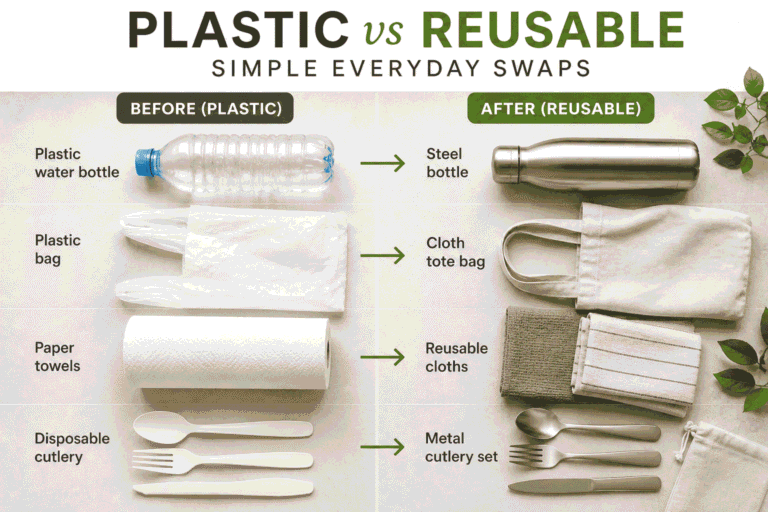
Small changes can make a big difference, especially if they are affordable and helpful. Not sure what swaps mean exactly? Read What Are Zero Waste Swaps? first. Select just three to start with:
- Kitchen: Try reusable lids or honey-based wrap in place of plastic wrap.
- Bathroom: Think about using a washable soap container or a bamboo toothbrush.
- On-the-go: Carry a reusable water bottle, cup, or bag when you’re on the go.
For busy beginners, here are some quick zero waste tips: To make sure you don’t forget, keep your reusables in your car, bag, or close to the door. Need more ideas? Check out 10 Easy Zero Waste Swaps for Beginners for a full, practical list you can start with today.
Swaps have the benefit of being affordable and instantly rewarding. Over time, many even save money. For instance, a single spend on a stainless steel water bottle can save hundreds of single-use bottles.
Step 3: Create a Simple Starter Kit
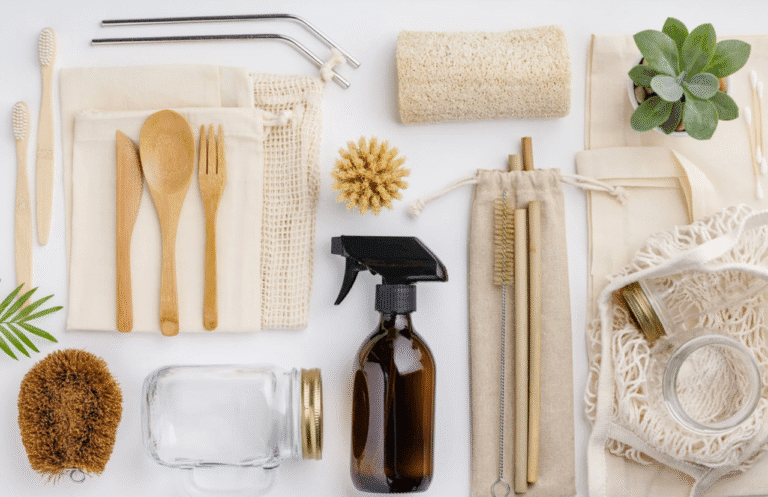
After making a few changes, create a small starter kit that you can carry with you or store at home. Your kit may contain:
- Shopping bags who can be used again
- A strong bottle of water
- A set of cutlery or utensils for travel
- A lidded coffee jar or cup
- Produce bags crafted from cloth or tiny bags
Many people recycle old boxes, tote bags, or jars, so you don’t have to buy everything new. I created a “Zero Waste Starter Kit Checklist” that you can download for free below if you want a guide.
Think about this as part of your beginner’s zero waste Five-step plan: Keeping habits is made easier with a kit, especially because life gets stressful. With time, you may change it to
Step 4: Plan Your Shopping & Cooking to Reduce Waste
Changes to your shopping and cooking habits is one of the fastest ways to reduce trash. Try:
- Buying basic foods like rice, oats, or nuts from the bulk bins;
- choosing for loose produce over packaged options;
- using your own bags or jars for groceries items;
- planning your meals for the week to reduce food waste.
Here’s a simple routine: write down three to four dishes for the week, buying only what you’ll use, and keeping the rest in jars of glass rather than plastic containers.
This method is perfect when you’re who are beginning a zero waste lifestyle because it saves money, reduces food waste, and quickly reduces the waste from your trash can.
Step 5: Build Habits & Community
Finally, make your actions into habits by focusing on long-term success. Try developing a new habit every two weeks, such as not to use single-use cutlery, composting food scraps, or bringing your coffee cup every day.
Support from the community also has a big impact. Check out online communities, swap events, or local zero-waste groups where you can exchange ideas and stay in motivation. You can even check out recycle shops and waste containers in many towns.
Keep in mind that living a zero waste lifestyle takes time. The goal is to build long-lasting, healthy routines rather than to be perfect. You will continue building a more thoughtful, sustainable way of life if you share yourself with positive people and use small successes to motivate yourself.
Quick Zero Waste Tips for Busy Beginners
Sometimes all you need are small changes that you can make immediately. For busy beginners, here are some quick zero waste tips that work with even busy days:
- Keep a reusable coffee cup in your car or bag.
- Avoid having to use single-usage dishes and plastic straws.
- Turn your fruit peels or coffee grounds into compost.
- Keep a glass or stainless steel water bottle with you.
- Instead of using paper napkins, use cloth ones.
- Choose for the soap bar or shampoo bars over the bottled ones.
- For leftovers from takeout, bring your own bag.
- Whenever feasible, convert to digital receipts.
- Keep leftovers in silicone bags or glass jars.
- To avoid single-use packaging, buy snacks in bulk.
Although these small actions might not seem like much, they soon add up to significant outcomes, such as less trash, fewer impulsive purchases,
Common Myths & How to Avoid Mistakes
It’s simple to believe that getting zero waste needs a life without any kind of plastic, lots of money, or unlimited free time. Not one of that is true in reality.
- Myth: The cost of zero waste is high. The truth is that many changes, such as using cloth bags or reusable bottles, result in saving money over time.
- Myth: It takes too long to achieve zero waste. The fact is that habits like packing your own bag or planning what to eat will save both time and effort.
- Myth: Being perfect requires zero waste. The truth is that every little change matters while progress is more important than perfection.
Beginners may approach zero waste with confidence by changing these concepts to highlight progress over stress.
Resources & Starter Checklist
I put up a few helpful zero waste for beginners tools that can help you in applying these steps into routine. Building routines and making changes are made easy by these tools.
The above printable Zero Waste Starter Checklist is available as a PDF.
Simple homemade shampoo, cleaning, and reusable replacement recipes. Small DIY recipes PDF
If you keep these tools close at your ready, you’ll always have a useful resource to turn to when you need a quick motivational boost.
 Stay Inspired: Zero Waste Resources
 Stay Inspired: Zero Waste Resources
Growing is never ends. To keep your journey to a zero waste lifestyle easy and motivating here are some of the best books, blogs, communities, and guides.
Books (Beginner-Friendly & Practical)
 Books (Beginner-Friendly & Practical)
- Zero Waste Home by Bea Johnson → Amazon link
- Plastic-Free: How I Kicked the Plastic Habit and You Can Too by Beth Terry → Amazon link
- 101 Ways to Go Zero Waste by Kathryn Kellogg → Amazon link
Websites & Blogs
 Websites & Blogs
- Going Zero Waste – Beginner tips, DIY swaps, and lifestyle guides.
- The Zero Waste Collective – Community-driven blog with simple swaps.
Community Groups
 Community Groups
- Zero Waste International Alliance – Global resource for zero waste advocacy.
- Zero Waste Facebook Community – Active group for sharing swaps, tips, and encouragement.
Practical Guides
 Practical Guides
- EPA’s Sustainable Management of Materials – U.S. government zero waste guidance.
- Recycle Now (UK) – Easy-to-follow recycling and waste reduction tips.
- Compost Guide – How to start composting at home (even in small spaces).
Keep learning, keep growing, and enjoy the journey to zero waste.




good